
There’s something about Japanese beef tataki that makes it feel luxurious without being over-the-top. The first time I tried it was at a small izakaya tucked away on a quiet Tokyo backstreet. The chef brought out this plate of paper-thin beef slices, lightly seared on the outside and deep ruby red in the middle. It was served cold, drizzled with a light soy-based sauce, and garnished with crisp green onions. One bite—and I was hooked.
I’ve thought about that dish ever since, and after a few tries at home, I finally figured out how to make a version that’s simple enough for a weeknight dinner but elegant enough for guests. I used a well-marbled ribeye in my version, which gave the final dish a buttery richness I loved. Traditionally, tataki is made with Wagyu or sirloin and served rare, but I personally prefer medium-rare for a bit more texture and warmth in the center. That said, this dish is incredibly flexible depending on your preferences.

What makes tataki special is how it’s bold but light, rich but refreshing. The beef is seared for less than a minute on each side, rested briefly to relax the fibers, then sliced paper-thin and paired with a dipping sauce that cuts through the richness.
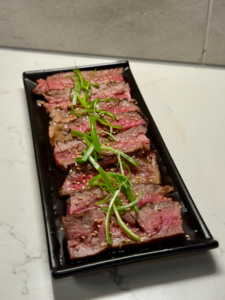
Instead of traditional garlic chips, I garnished mine with green onion curls soaked in ice water for a crisp, clean finish. A sprinkle of fried shallots or onions is also a popular and delicious topping. This dish is fast, easy, and full of flavor—and once you try it, you’ll wonder why you haven’t been making it all along.
Notes & Tips
- Best cuts to use: Ribeye is rich and flavorful, but Wagyu and sirloin are more traditional picks for tataki.
- Rare vs. medium-rare: Tataki is typically served rare, but medium-rare is great if you want a little more warmth. Use a thermometer to hit your perfect doneness.
- Green onion curls: Soaking in ice water gives you a beautiful garnish that adds freshness and texture.
- Garnish options: Try crispy fried shallots, thinly sliced radish, or even ponzu for variety.
- Make-ahead tip: You can sear and chill the beef a few hours ahead of time—just slice and plate right before serving.
FAQ
What is Japanese beef tataki?
Beef tataki is a Japanese dish where beef is lightly seared, then chilled and sliced thinly. It’s typically served rare with a soy-based dipping sauce.
Is tataki always served rare?
Traditionally, yes. But I like mine medium-rare for extra richness. You can adjust the cook time to your preferred doneness—it still turns out beautifully.
Can I use other cuts of beef?
Absolutely. Wagyu, sirloin, filet mignon, or strip loin all work well. Just make sure the beef is tender and marbled.
Do I need any special equipment?
Not at all. A hot pan, a thermometer (optional), and a sharp knife are all you need.
What’s the benefit of plating the sauce underneath the beef?
It keeps the slices from becoming soggy and lets you appreciate the texture of the beef more. But drizzling the sauce on top works too—totally up to you.

Japanese Beef Tataki
Ingredients
Equipment
Method
- Pat your ribeye dry with paper towels. Season generously with salt and pepper on all sides. Let it sit at room temperature for 10–15 minutes before searing for a more even cook.
- Heat oil in a pan over high heat until shimmering. Sear the beef on each side for 30–45 seconds, just until a crust forms. For medium-rare (like I made), aim for an internal temperature of 130–135°F (54–57°C). If you want it rare (traditional), stop at 120–125°F (49–52°C).

- Remove the beef from the pan and let it rest for about 5 minutes at room temperature. This step stops the cooking naturally and helps retain juices. Then refrigerate for 30 minutes to make slicing easier.
- In a small bowl, whisk together soy sauce, rice vinegar, mirin, and optional yuzu or lemon juice. This bright, savory sauce balances the richness of the beef.
- Slice green onions lengthwise into ultra-thin strips and place them in a bowl of ice water. Let them soak for 5–10 minutes until they naturally curl. Drain and pat dry.
- Slice the chilled beef against the grain into very thin slices. Spoon the sauce onto the bottom of the plate, then neatly arrange the beef slices on top. Garnish with green onion curls and optional fried shallots or crispy onions. If you prefer, you can also drizzle the sauce directly over the beef.

Nutrition
Notes
- Best cuts to use: Ribeye is rich and flavorful, but Wagyu and sirloin are more traditional picks for tataki.
- Rare vs. medium-rare: Tataki is typically served rare, but medium-rare is great if you want a little more warmth. Use a thermometer to hit your perfect doneness.
- Green onion curls: Soaking in ice water gives you a beautiful garnish that adds freshness and texture.
- Garnish options: Try crispy fried shallots, thinly sliced radish, or even ponzu for variety.
- Make-ahead tip: You can sear and chill the beef a few hours ahead of time—just slice and plate right before serving.