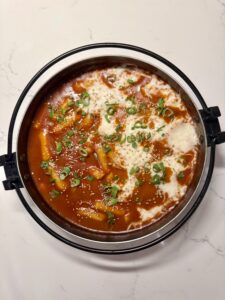
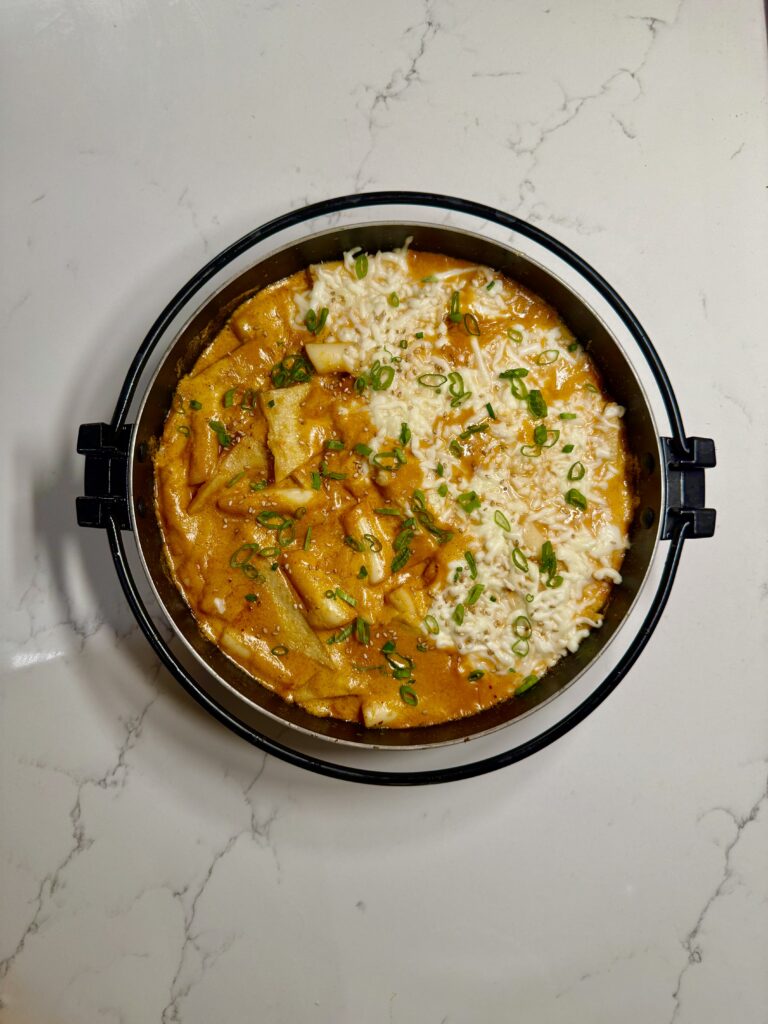
If there’s one Korean street-food dish I could eat every week, it’s tteokbokki. But as much as I love the spicy red original tteokbokki, there’s something about the creamy version — rose tteokbokki — that completely stole my heart. This rose tteokbokki recipe has become a favorite in my kitchen.
While tteokbokki has been a beloved Korean street food since the 1950s, the creamy “rose” version is a more modern twist that gained popularity in the late 2010s. Inspired by Western pasta sauces and Korea’s love for fusion comfort foods, chefs began combining spicy gochujang broth with milk or cream to mellow the heat and create a velvety, pink sauce. This playful blend — nicknamed rose tteokbokki for its rosy hue — quickly became a café favorite, especially among younger diners who wanted something a little less fiery but still packed with bold, cheesy flavor.
I first tried it at a small korean restaurant in LA (unfortunately I don’t quite remember the name of the restaurant). It was so delicious, creamy, and comforting. Since then, I almost always reach for rose tteokbokki over regular tteokbokki when I want cozy comfort food. It’s like spicy pasta meets cheesy Korean rice cakes — the best of both worlds. This rose tteokbokki recipe is perfect for a comforting meal.
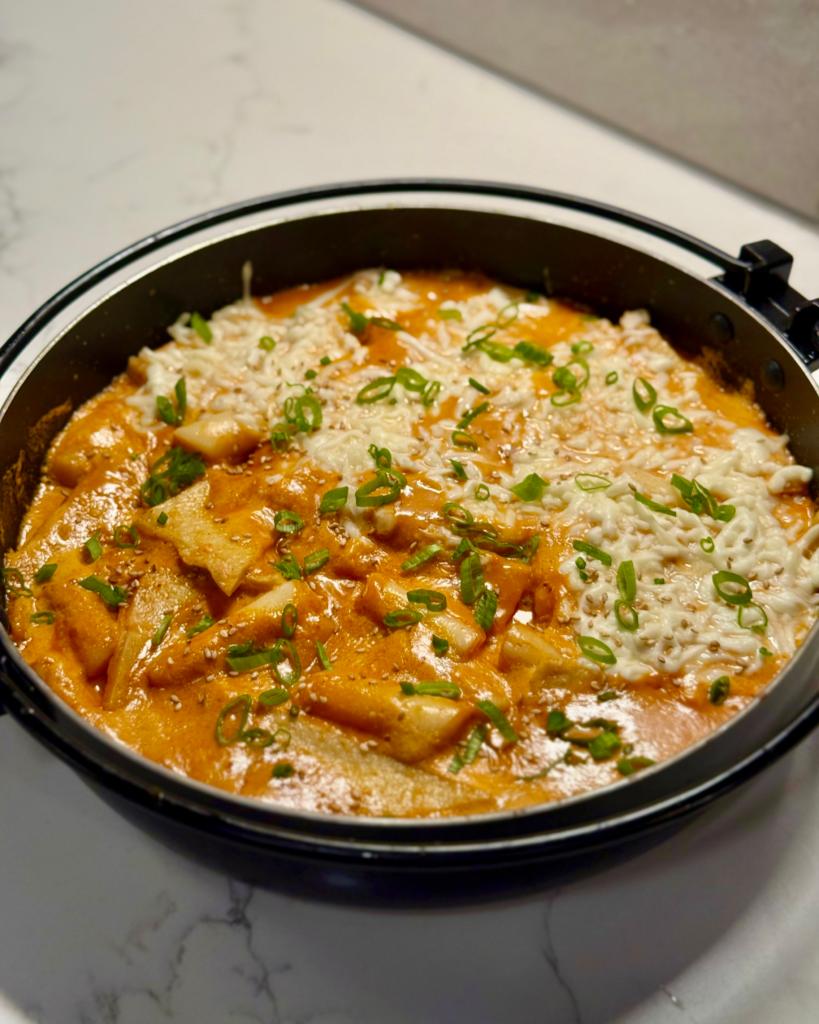
The main difference between regular tteokbokki and rose tteokbokki is that the rose tteokbokki sauce has cream in it, which makes the sauce taste more rich and milder in spice. If you want to make the regular tteokbokki instead, feel free to checkout my tteokbokki recipe here. For a creamy twist, try this rose tteokbokki recipe.
Why You’ll Love This Rose Tteokbokki
- 🌶️ Balanced heat – Gochujang and optional gochugaru give a gentle kick without overpowering the creaminess.
- 🧀 Cheesy comfort – Melted mozzarella makes it irresistibly gooey.
- ⏱️ Fast & easy – Minimal prep and 15 minutes on the stove.
- 🍲 Cafe-style at home – Bring that Seoul café vibe straight to your kitchen.
Rose tteokbokki gets its “rosé” name from the soft pink sauce created by gochujang and cream. It’s rich but still light enough to enjoy for lunch or a late-night snack.
Ingredients You’ll Need
(See full amounts in the printable card below)
I get most of my ingredients at Hmart, however I have included some links below to find them online if you don’t have an Hmart or Korean store near you!
- Korean rice cakes (tteok) – fresh or frozen
- Korean fish cakes – optional, for authentic texture
- Garlic, soy sauce, sugar
- Gochujang + gochugaru (Korean chili flakes)
- Milk + heavy cream
- Shredded mozzarella
- Green onions for garnish
Step-by-Step: How to Make Rose Tteokbokki
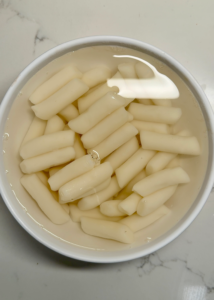
- Soften the rice cakes – Soak in cold or warm water for 10–30 minutes.
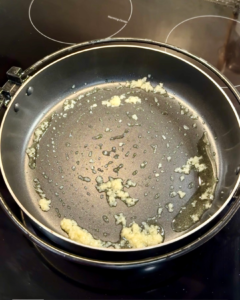
- Sauté garlic – Cook in a splash of oil until fragrant.
- Make the rosy sauce – Stir in gochujang, gochugaru, soy sauce, and sugar, then whisk in milk and cream.
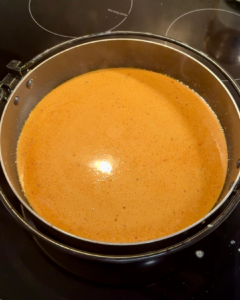
- Simmer with rice cakes – Add tteok and fish cakes, cook 6–8 minutes, stirring so the sauce thickens evenly.
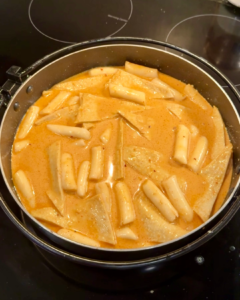
- Finish with cheese – Reduce heat, sprinkle mozzarella, cover until gooey.
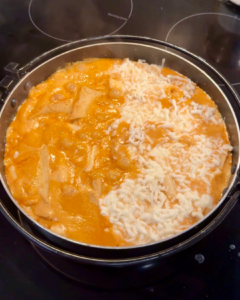
- Serve & enjoy – Garnish with green onions and eat hot.
Ivy’s Tips for the Perfect Rose Tteokbokki Recipe
- Soak properly – Cold rice cakes need time to loosen up; it helps them stay tender inside.
- Play with spice – Use less gochugaru for mild, or add more for fiery.
- Switch the cheese – Mozzarella is classic, but I also love adding a bit of parmesan for extra depth.
- Upgrade with add-ins – Bacon bits, shrimp, or sautéed mushrooms make this a full meal.
Storage & Reheating
Rose tteokbokki tastes best right after cooking (the cheese stretch is unbeatable). If you have leftovers, refrigerate up to 2 days. Reheat gently with a splash of milk or water to revive the sauce.
FAQ: Rose Tteokbokki Recipe
Q: Can I make this without fish cakes?
A: Yes — skip them or replace with veggies like mushrooms or bell peppers.
Q: Is there a dairy-free version?
A: Swap milk and cream for oat or soy milk and use vegan cheese.
Q: What makes rose tteokbokki different from classic tteokbokki?
A: Traditional tteokbokki is cooked in a spicy gochujang broth, while rose tteokbokki blends that flavor with cream and cheese, giving it a silky, less fiery finish.
Q: Can I add protein?
A: Definitely — chicken, bacon, or even tofu taste amazing with the creamy sauce.

Rose Tteokbokki Recipe
Ingredients
Equipment
Method
- Soak rice cakes for 10–30 minutes, then drain. (This is optional, however highly recommended if you want the texture of the rice cakes to be soft)
- In a nonstick pan, sauté garlic in a splash of oil for 1–2 minutes.
- Add gochujang, gochugaru, soy sauce, and sugar. Mix well. Pour in milk and cream, stirring until rosy.
- Add rice cakes and fish cakes. Simmer over medium-low for 6–8 minutes, stirring, until soft and thickened. Add water if needed.
- Reduce heat, top with mozzarella, and cover for 1–2 minutes until melted.
- Garnish with green onions and serve warm.
Nutrition
Notes
Tips for the Perfect Rose Tteokbokki
- Soak properly – Hard rice cakes won’t soften evenly. A quick soak makes all the difference.
- Adjust spice – Skip gochugaru for a mild version, or add extra for extra kick.
- Cheese matters – Low-moisture mozzarella melts best, but try cheddar or a cheese blend for variety.
- Batch ahead – Prep the sauce and rice cakes separately, then combine when ready to serve.
How to Store & Reheat
Rose tteokbokki is best fresh, but leftovers can be refrigerated for up to 2 days. Reheat gently with a splash of milk or water to loosen the sauce.FAQ About Rose Tteokbokki
Q: Can I make this rose tteokbokki recipe without fish cakes?A: Absolutely! Skip them for a vegetarian version (and use veggie milk if desired). Q: Is there a dairy-free option?
A: Substitute oat or soy milk and use a vegan cream plus dairy-free cheese. Q: Can I add proteins or veggies?
A: Yes! Shrimp, bacon, or sautéed mushrooms pair beautifully with the creamy sauce. Q: What’s the difference between rose tteokbokki and regular tteokbokki?
A: Traditional tteokbokki uses a spicy gochujang broth, while rose tteokbokki softens that heat with cream and cheese.