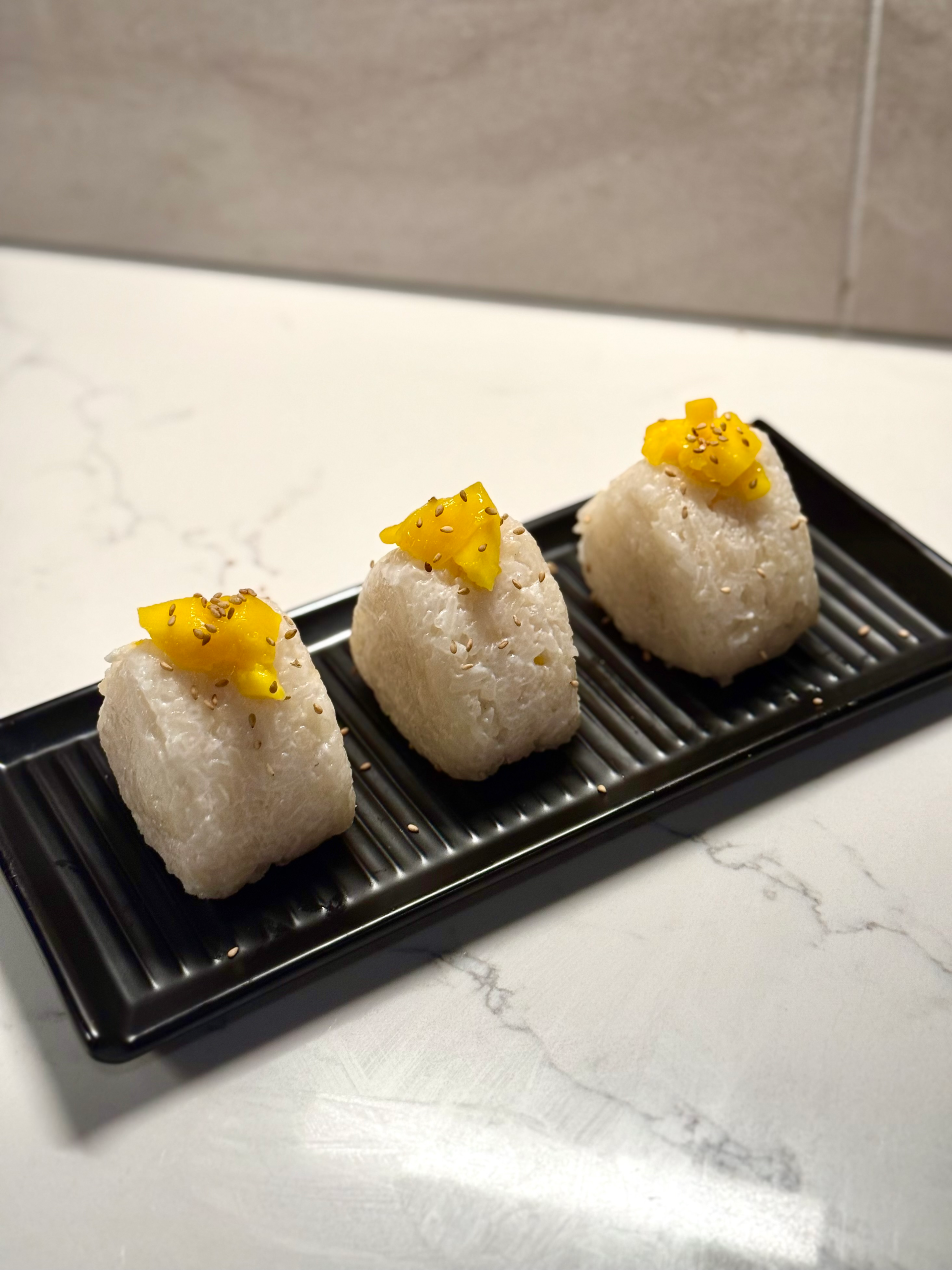
Ingredients
Equipment
Method
Soak the Rice (Essential Step)
- Rinse the glutinous rice 2–3 times until the water runs mostly clear. Then soak in clean water for at least 1 hour or up to overnight for best results.
Steam the Rice
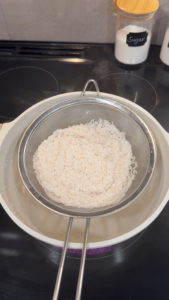
- Drain the soaked rice and place it in a fine mesh sieve or bamboo steamer over a pot of boiling water. Make sure the rice doesn’t touch the water. Cover and steam for 20–25 minutes, stirring or flipping halfway through, until the rice is fully cooked and translucent.
Make the Coconut Sauce
- While the rice is steaming, combine the coconut milk, sugar, and salt in a small saucepan. Warm over medium heat until it begins to steam—don’t let it boil. For a thicker sauce that helps bind the rice, you can stir in 1 tsp cornstarch (dissolved in a tablespoon of coconut milk) at this stage. Let it cool slightly.
Mix the Rice and Let Rest
- Place the hot steamed rice in a mixing bowl. Gently stir in about 2/3 of the coconut sauce, reserving the rest for drizzling or dipping. Cover and let the rice sit for 15 minutes so it becomes sticky and absorbs the flavor.
Prepare the Mango Filling
- Peel and dice the mango into small cubes. Optionally, toss with 1–2 tsp of coconut condensed milk or coconut cream for added richness.
Shape the Onigiri
- You have two options here (I have a visual guide posted above):
- Using an Onigiri Mold: Lightly wet or line your mold with plastic wrap. Add a scoop of coconut sticky rice, press down lightly, add mango filling in the center, and top with more rice. Press firmly to shape, then release.
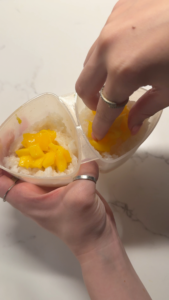
- Without a Mold (Hand Method): Lightly wet your hands or use plastic wrap to prevent sticking. Scoop about 2 tablespoons of rice, flatten it into a disc, spoon some mango in the center, then top with a bit more rice. Gently press into a triangle or round shape, compressing it just enough to hold its form.
Chill to Set (Optional)
- Place your shaped onigiri in the fridge for 15–30 minutes to help firm them up—especially useful if you're serving them later or packing for a picnic.
Garnish & Serve
- Before serving, drizzle with the reserved coconut sauce, sprinkle with toasted sesame seeds, coconut flakes, or a pinch of flaky salt. For presentation and easy handling, wrap the base of each onigiri in banana leaf or parchment paper.
Nutrition
Notes
- Don’t skip the soak — it’s essential for that authentic chewy sticky rice texture.
- If you don’t have a steamer, use a mesh sieve over a pot (see visual guide below).
- Want a toasted edge? Use a kitchen torch to caramelize the outside slightly.
- Chill before serving if transporting or packing for lunch.
- You can prep the rice and mango separately the night before and shape them just before serving.
- Because this onigiri contains fresh mango and coconut milk, it’s best enjoyed fresh or within a short time window. I wouldn't recommend storing this in the fridge for longer than 24 hours.
- Freezing is not recommended. The texture of glutinous rice and fresh mango changes after thawing, becoming mushy or grainy.